
Why Some Wedding Galleries Feel Timeless, and Others Feel Dated

Why do couples want photographs that feel timeless? There is a particular kind of quiet that happens when someone opens an old photograph. Not a photograph of a stranger. A photograph of themselves, or their parents, or a grandmother they barely remember, standing in a doorway in a dress that still somehow looks right. Nobody studies the film grain in that moment. Nobody notices the era of the print. They only notice her face, and the hand resting on the doorframe, and the fact that they are, for a few seconds, back in that room.
Now think of the opposite. A wedding photograph from a decade ago, one that made sense at the time. Heavy filter, heavy pose, everyone angled the same way toward the same trend. It still shows the day. It just doesn’t return anyone to it. The couple looks like they are performing a wedding rather than living one.
That difference has very little to do with equipment, or budget, or even talent in the traditional sense. It comes down to what the photographer was actually paying attention to.


What the Day Actually Offers
A wedding day holds two kinds of things. Things that will matter later, and things that only feel important in the moment. The florals, the hashtag, the exact shade of the linens belong to the day itself. They are lovely. They are also temporary. What tends to matter later is smaller and easier to miss. A father’s hand tightening slightly on his daughter’s arm before the doors open. The particular way two people stand close without needing to touch. The kind of laughter that only happens once, right after the vows, when everyone finally exhales.
Photographs that endure are usually the ones built around those smaller things. Not because someone set out to make them timeless, but because their attention was somewhere honest.


A Room That Doesn’t Need Help
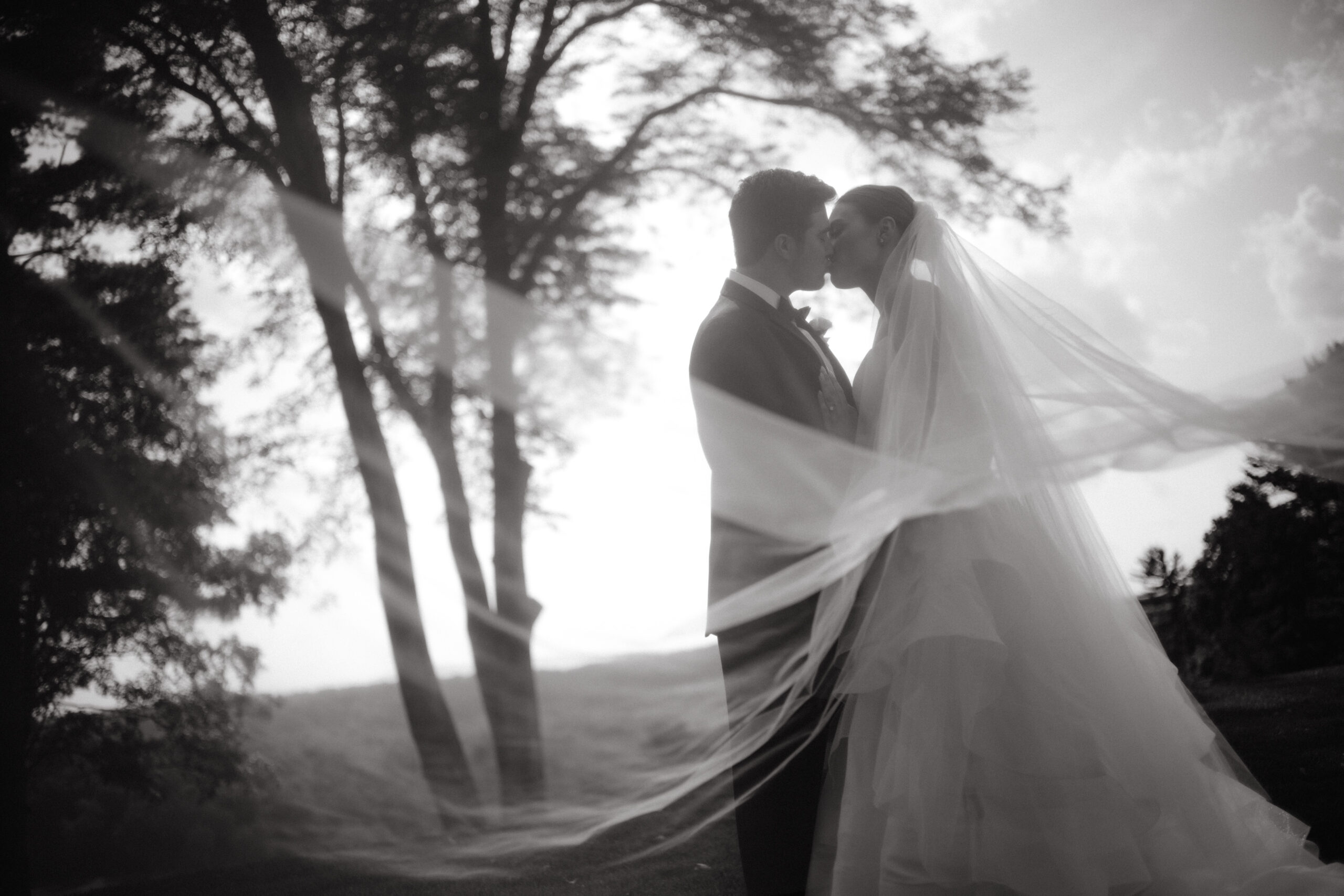
Take a venue like Park Chateau, tucked between Manhattan and Philadelphia. French inspired stone. Gardens that have had years to settle into themselves. The light through the ballroom’s tall windows in late afternoon does not need help. It falls across the room the way it has for years, warm and unhurried. The work is simply to let it land where it wants to land, rather than correcting it into something else. A couple walking the garden path at dusk, string lights just beginning to hold their own against the fading sky, needs very little from a photographer beyond patience and a willingness to stay quiet.
The chapel does something similar. Its architecture already carries so much weight that adding style on top of it tends to compete rather than complement. The most honest photographs from a room like that are often the simplest ones. Two people standing at the front. The light doing exactly what light does. Everyone else in the room watching them the way people watch something they want to remember precisely.


Planning something of your own? See more of my work or begin your inquiry.
Why Trends Age and Attention Doesn’t
Trend driven editing tends to age quickly. A heavy color grade, a particular fade, a pose everyone was doing that season, all of it borrows from a moment outside the wedding itself. A few years later, that borrowed moment becomes obvious. It sits between the viewer and the memory instead of alongside it. The photograph stops being about the couple and starts being about 2019, or 2015, or whichever year left its fingerprint.
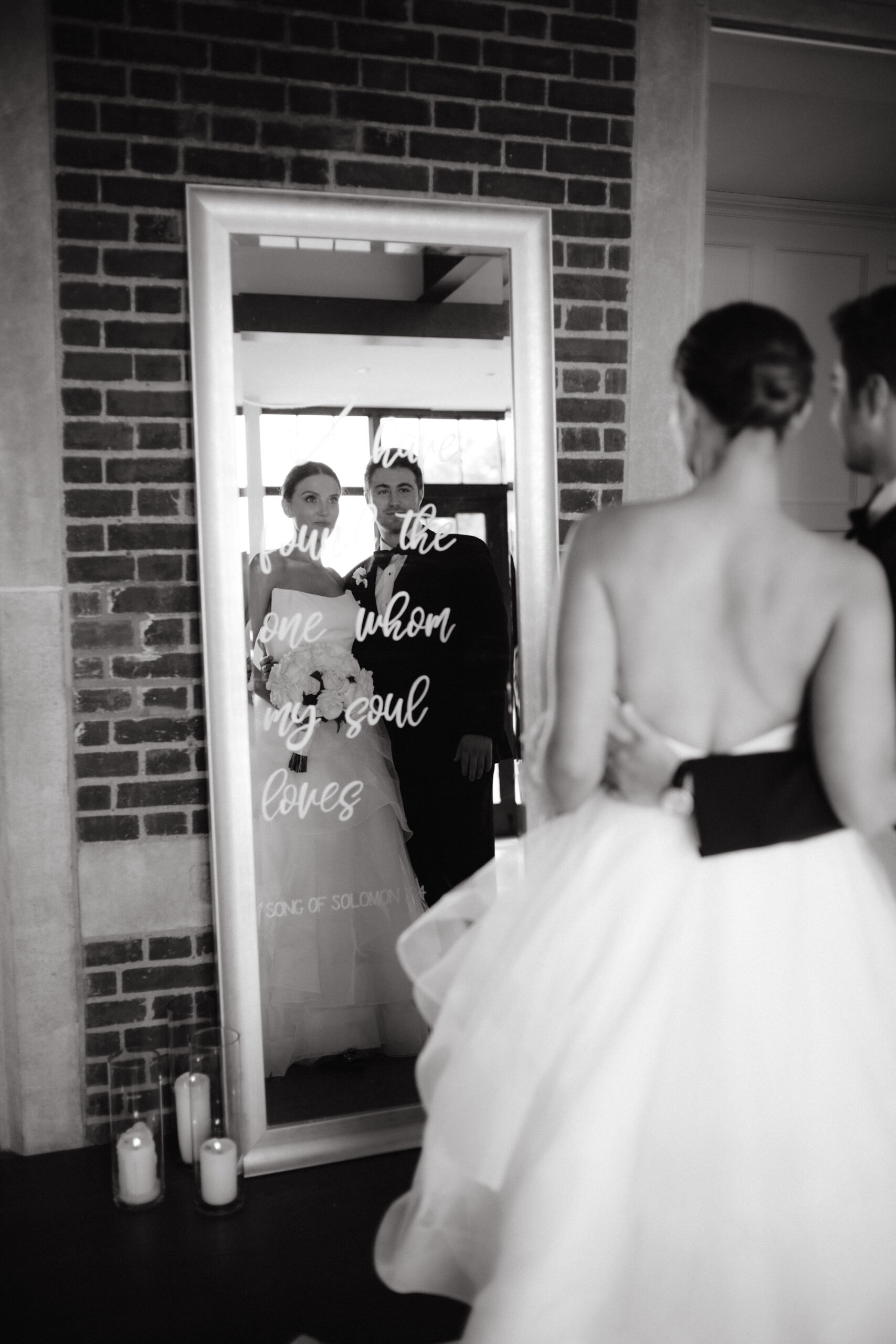
What tends to hold up instead is restraint. Color that looks the way the room actually looked. Composition that gives the couple room to simply be two people, rather than models arranging themselves for a camera. An eye toward relationships more than staging. A mother adjusting a veil. A brother trying not to cry during a toast. The small choreography of a family finding its way through a day that changes all of them slightly.
None of this happens by accident. It comes from a specific way of watching a wedding unfold, one that treats the ordinary interruptions as part of the story rather than a flaw in it. A shoe that pinches. A breeze that undoes a hairstyle. A niece who will not stop tugging on a hem. Those interruptions are often what make a photograph feel like a particular day rather than a generic one. Specificity is what keeps a photograph from aging. A trend belongs to everyone that year. A gesture belongs to one family.


What a Photograph Is Actually For
Most couples want something from their photographs that they haven’t fully put into words yet. Few are hoping for images that impress a wedding blog. Most are hoping, somewhere quieter, for something their own children might understand one day. A photograph a daughter finds at forty, still able to feel what the room felt like. A photograph a widow keeps on a nightstand for thirty years without ever tiring of it. That kind of longevity asks for something different than what is currently popular. It asks for photographs that were never trying to be current in the first place.
For planners working alongside a photographer on a day like this, the approach tends to look fairly unremarkable from the outside. That is often the point. It means fewer staged interruptions to a timeline. Less pulling people away from their own reception to recreate a moment for the camera. More trust that the day itself, moving at its own pace, will offer what it needs to offer. A photographer paying attention to what will matter later rarely needs to manufacture anything in the moment. The day tends to provide, on its own, everything worth keeping.
None of this rejects beauty or polish. A refined day deserves photographs that meet it with the same level of care: thoughtful light, considered composition, images that feel intentional rather than accidental. The distinction is simply between polish that serves the couple and polish that serves a look. One disappears into the photograph. The other announces itself.
Years from now, most couples won’t remember which flowers were in season or what the seating chart looked like. They will remember how it felt to stand at the front of a room and watch someone they love walk toward them. A photograph that holds onto that feeling, rather than the aesthetic of whatever year produced it, is the kind people return to again and again. Not out of nostalgia, but because it still works. It still does what it was always meant to do.

The Standard That Doesn’t Change
That is the quiet standard behind every gallery worth keeping. Not whether it looks current today, but whether it still feels true decades from now. Two people open it on an anniversary. Their hands have changed. Their home has changed. They recognize themselves immediately, and they mean it.
More timeless moments




Related: Editorial wedding photography: how it differs from documentary · Film wedding photography: film vs digital
Planning something of your own? I would love to hear about it. Begin your inquiry


